
5 Warning Signs of Hidden Water Damage in Your Chicago Home
Not all water damage floods your basement overnight. Some of the most costly damage builds slowly behind walls and under floors. Here are 5 signs Chicago homeowners should never ignore.
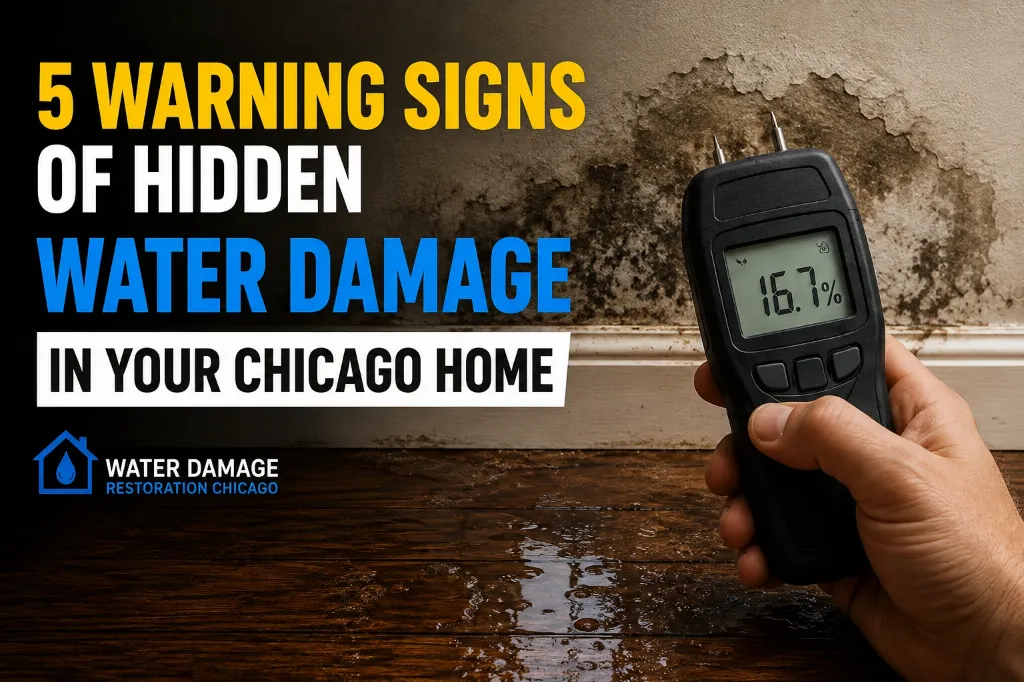
Chicago's unique architectural landscape — a blend of century-old brick two-flats, historic greystones, mid-century bungalows, and modern downtown high-rise condos — shares one universal vulnerability: hidden water damage. Unlike an abrupt pipe burst or standing floodwater, insidious leaks accumulate silently behind drywall, subfloor membranes, and plaster ceilings for weeks or even months before visual symptoms emerge.
By the time surface discoloration or musty odors alert you, moisture may have already decomposed framing, rusted structural ties, and seeded dangerous colonies of toxic mold. Here are the five vital warning signs every Chicago homeowner needs to recognize.
1A Musty or Earthy Smell That Won't Go Away
A persistent, lingering earthy odor — particularly noticeable when entering your basement, bathroom, or rooms adjacent to exterior brick masonry — is an unmistakable bio-indicator of damp organic materials. When porous drywall or cellulose insulation absorbs moisture without rapid evaporation, fungal colonies release microbial volatile organic compounds (MVOCs).
Commercial aerosol sprays and plug-in air fresheners only mask the odor temporarily while spores quietly spread. If a room smells damp, active moisture is almost certainly trapped in the framing or subfloor.
2Discoloration or Staining on Walls and Ceilings
Yellow, rust, copper, or dark brown rings on drywall surfaces and acoustic ceiling tiles are textbook signs of active water intrusion. In Chicago's historic multi-unit greystones and vintage two-flats, plumbing pipes and heating risers run inside uninsulated vertical wall chases between floors.
Stains near rooflines, window headers, or bathroom stack vents indicate either masonry seepage, deteriorating flashings, or a slow pinhole copper pipe leak that requires immediate professional evaluation.
3Peeling Paint, Bubbling Drywall, or Warped Flooring
When drywall absorbs moisture, the gypsum core softens and expands, breaking adhesion with latex paint and forming noticeable blisters or peeling bubbles. Similarly, wood and laminate floorboards expand rapidly upon moisture contact:
- Cupping: The edges of floorboards rise higher than the center.
- Crowning: The center of the board bulges upward under sustained moisture pressure.
- Spongy Subfloors: Walking over an area feels unusually soft or creates new squeaks.
These physical deformities confirm that water has sat inside the subfloor assembly for days. For rapid remediation, explore our water damage restoration Chicago services.
4A Higher-Than-Usual Water Bill
If your monthly Chicago Department of Water Management utility bill spikes without an obvious change in household consumption (like filling a pool or having seasonal houseguests), you may have an undetected pressurized leak.
A hairline crack in a pressurized copper water line behind a shower surround or under a concrete slab foundation can release hundreds of gallons of water per week into structural framing before leaking through ceilings.
5Increased Allergy Symptoms or Respiratory Irritation at Home
Do family members suffer from unexplained coughing, itchy eyes, sinus congestion, or sudden asthma flare-ups that mysteriously disappear when leaving the house for work or school?
Hidden moisture behind drywall provides ideal incubators for toxic mold strains such as Stachybotrys chartarum and Aspergillus. Microscopic airborne spores enter heating and AC ducting, circulating throughout your living spaces. When mold is suspected, professional mold remediation and containment are critical to safeguard indoor health.
What to Do If You Notice These Signs
Hidden water damage never resolves itself. Repainting water stains or increasing ventilation only postpones catastrophic structural failures and exponentially increases restoration expenses down the road.
A professional water damage restoration chicago inspection uses advanced non-destructive diagnostic tools:
- FLIR Thermal Imaging: Pinpoints cold evaporation patterns behind finished drywall without punching holes.
- Calibrated Moisture Meters: Measures exact percentage moisture content within structural wood studs.
- Acoustic Leak Detection: Identifies pressurized pipe breaks behind solid masonry and tiled showers.
If you are facing active, flowing water rather than hidden warning signs, consult our immediate response checklist: Water Damage Restoration Chicago: What to Do in the First 24 Hours.
When to Call a Professional Restoration Specialist
Multiple Warning Signs Present
You observe both musty odors and peeling paint or ceiling discoloration in the same zone.
Persistent Odors After Deep Cleaning
Earthy smells persist even after scrubbing, signaling deep structural saturation.
Pre-Listing Real Estate Inspection
Eliminate surprise moisture flags before selling or refinancing your Chicago home.
Incomplete Prior Drying
A past plumbing repair stopped the leak but walls and subfloors were never professionally dehumidified.
To understand expected remediation pricing, view our detailed Chicago Water Damage Restoration Cost Guide. Our IICRC-certified technicians serve residential and commercial properties throughout Chicago. Learn about our inspection process and team or schedule a free water damage inspection today.