
How Much Does Water Damage Restoration Cost in Chicago? (2026 Pricing Guide)
Restoration costs can range from a few hundred dollars to tens of thousands, depending on the size and severity of the damage. Here's a realistic breakdown of what Chicago homeowners actually pay.
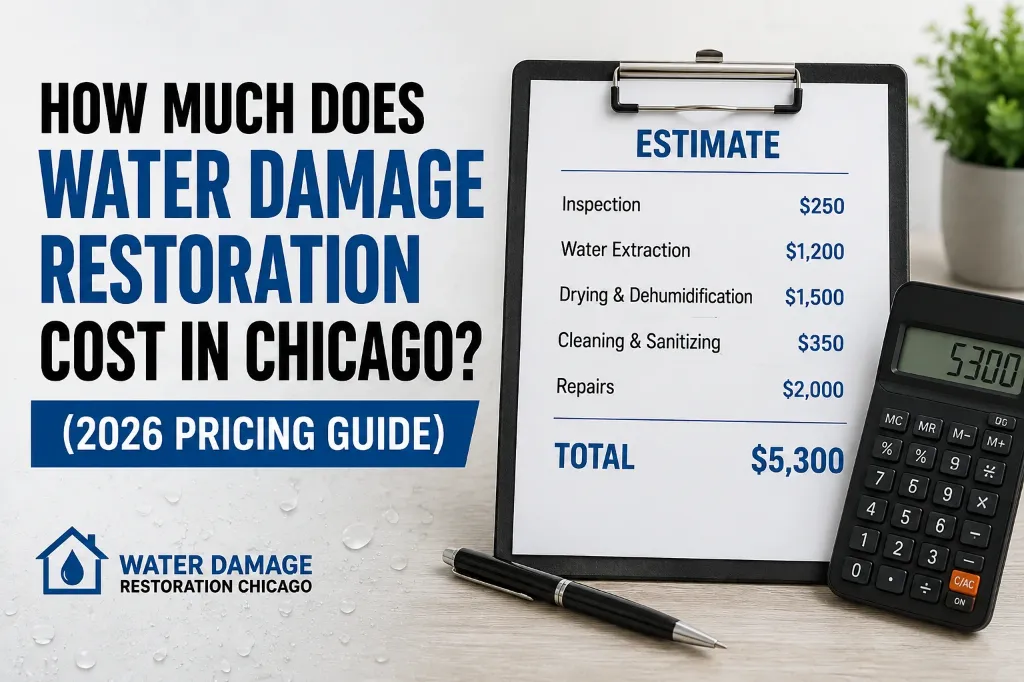
One of the first questions homeowners ask after discovering water damage is simple: how much is this going to cost? The honest answer is that it depends — on the source of the water, how long it sat before being addressed, the materials affected, and the square footage of the space.
This guide breaks down realistic price ranges for professional water damage restoration chicago services so you know exactly what to expect before requesting a quote.
Average Water Damage Restoration Costs in Chicago
In the Chicago metropolitan area, restoration projects fall into four broad tiers based on water category, structural penetration, and equipment deployment:
| Severity Tier | Typical Damage Scenario | Chicago Cost Range | Typical Timeline |
|---|---|---|---|
| Minor Damage | Small clean water leak, caught within 12–24 hrs, minor dry-out | $500 – $1,500 | 1 – 2 days |
| Moderate Damage | Flooded single room, partial drywall cut, wet carpet/pad removal | $1,500 – $5,500 | 3 – 5 days |
| Major Damage | Flooded finished basement, multiple rooms, structural drying | $5,500 – $15,000+ | 5 – 10 days |
| Severe Flooding / Sewage | Category 3 black water sewer backup with full rebuild & antimicrobial treatment | $15,000 – $50,000+ | 2 – 4 weeks |
*These figures are realistic Chicago market estimates. An exact quote requires an in-person diagnostic inspection using moisture meters and thermal imaging to calculate total square footage and affected structural cavities.
What Affects the Cost of Water Damage Restoration
1. The Category of Water
Category 1 (Clean Water): Originating from broken supply pipes or overflowing sinks. Costs the least to remediate.
Category 2 (Grey Water): From dishwasher or washing machine overflows carrying minor contaminants.
Category 3 (Black Water): Raw municipal sewer backups or street floodwaters carrying dangerous pathogens. Requires biohazard gear, specialized sanitizing agents, and complete disposal of porous items.
2. How Long the Water Sat Before Treatment
The longer water sits, the deeper it saturates structural materials. Water extracted within 12 hours often allows subfloors and drywall to be saved via rapid dehumidification. Water left for 48 hours frequently necessitates tear-outs and disposal.
3. Total Square Footage Affected
Restoration pricing scales with equipment needs. A 100 sq ft bathroom might require one commercial air mover and one dehumidifier, whereas a 1,200 sq ft flooded basement requires industrial trailer-mounted extraction units and dozens of high-velocity air movers.
4. Mold Remediation Requirements
If water has sat unnoticed behind walls, mold spore colonies require containment barriers, HEPA negative air machines, and antimicrobial fogging, which adds $1,500 to $6,000+ depending on spore counts. See our mold remediation services.
5. Chicago-Specific Architectural Factors
Older Chicago greystones and two-flats feature plaster-and-lath walls, vintage cast iron plumbing, and deep masonry basements. Plaster holds moisture much longer than drywall and requires specialized drying equipment to salvage.
Does Homeowners Insurance Cover the Cost?
In many cases, yes — particularly for sudden and accidental water damage like burst pipes during a Chicago freeze snap or water heater ruptures. In these cases, insurance typically pays for both emergency mitigation and structural reconstruction, minus your deductible ($500–$1,500).
However, standard policies exclude overland flooding and often exclude sewer backups unless you have an endorsement. We break down the exact policy language in our comprehensive guide: Does Homeowners Insurance Cover Water Damage in Chicago?
How to Get an Accurate Chicago Water Restoration Quote
The only way to know your true out-of-pocket cost is a professional on-site diagnostic inspection. A licensed water damage restoration chicago contractor will assess moisture levels throughout your home, identify the water category, map hidden saturation zones, and provide an itemized Xactimate quote that your insurance adjuster accepts.
If you suspect you have subtle, slow-developing damage rather than a massive flood, read our guide on 5 Warning Signs of Hidden Water Damage in Your Chicago Home.
Dealing With an Active Water Emergency Right Now?
Don't delay mitigation while waiting on estimates. Every hour water sits increases structural replacement expenses exponentially. Follow our emergency action steps: Water Damage Restoration Chicago: What to Do in the First 24 Hours, or explore our basement water damage repair services.
Want to learn more about our certifications and direct-insurance billing process? Learn more about our team or request a free, no-obligation estimate today.